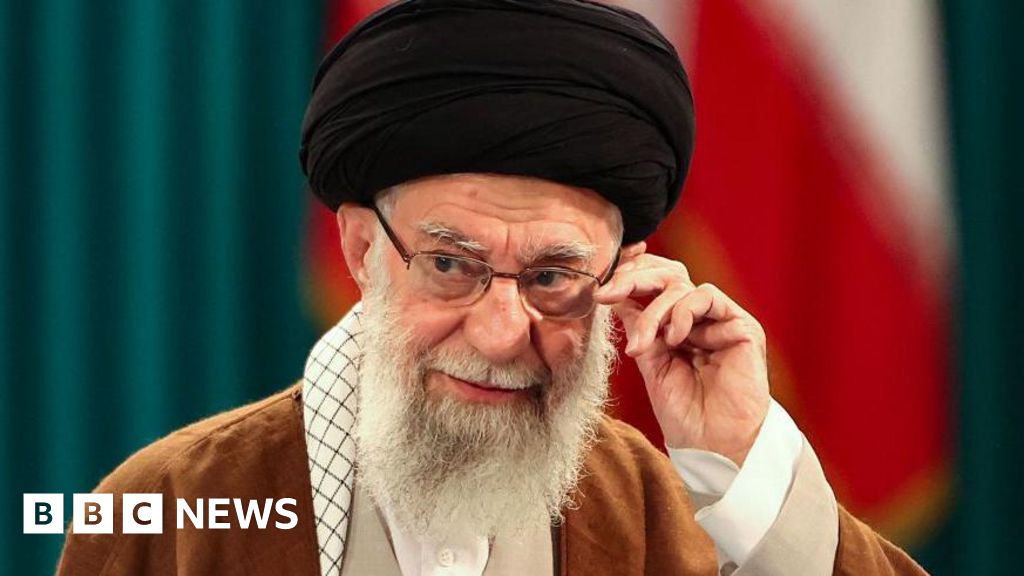
Khamenei Under Fire: Iran Battles External Threats & Internal Protests
Iran finds itself at a pivotal crossroads, navigating a treacherous landscape marked by escalating external pressures and an increasingly restive populace. At the heart of this storm is Ayatollah Ali Khamenei, the nation's Supreme Leader, whose leadership faces unprecedented challenges from both abroad and within. The recent
Khamenei's Rare Riposte: Iran Slams Israel's 'Psychological Operation', delivered by his office in response to an open letter from former Israeli defense minister Yoav Gallant, underscores the intensity of the geopolitical conflict, while widespread internal protests lay bare the deep fissures within Iranian society. This dual crisis presents a complex and formidable test for the Islamic Republic, demanding a closer look at the strategies at play and the implications for regional stability.
The Information Battlefield: Khamenei's Rare Riposte to External Pressures
The diplomatic and military exchanges between Iran and its adversaries frequently spill over into a crucial domain: public perception. This was vividly illustrated by the extraordinary decision of Ali Khamenei's office to publicly rebuke an open letter penned by former Israeli defense minister Yoav Gallant. Published as an op-ed on Khamenei's official website, this rare rejoinder to Israeli officialdom dismissed Gallant's assertions of overwhelming Israeli military and intelligence superiority as mere "propaganda" and a "full-scale psychological operation."
Gallant's letter was not a mere political statement; it was a calculated attempt to sow doubt and fear within the Iranian leadership. Referring to a recent 12-day Iran-Israel conflict (June 2025), Gallant claimed, "What unfolded in June 2025 was not merely a military campaign. It was the strategic collapse of a system you spent four decades constructing." He detailed a series of Israeli strikes on June 13, which reportedly pounded military and nuclear sites, assassinated senior commanders, and caused significant casualties. While Iranian missiles also inflicted casualties on Israeli civilians, the thrust of Gallant's message was a stark warning of Israeli penetrative intelligence.
"We knew your schedules. Your sites. Your communications. Your conversations with your closest allies – most of whom are no longer with you – in Beirut, Damascus, and Tehran. Your timelines. Your fallback plans. And your blind spots," Gallant boldly asserted. This claim of deep access to Iran's inner workings, including military planning and high-level decision-making, aimed to project an image of vulnerability and omniscience on the Israeli side. The letter also highlighted perceived weaknesses in Iran’s air defenses and issued a stern warning against any attempt to restore the nuclear program, promising future attacks. "Abandon your war against a small, determined country a thousand miles from your border," Gallant urged, "and focus instead on the welfare and future of your own people."
For the Iranian leadership, the decision to engage directly with Gallant's claims, particularly through an official channel of the Supreme Leader, highlights the perceived importance of this "conflict whose primary battlefield is not border zones, but public perception and the realm of awareness." This
Iran's Vulnerabilities? Khamenei's Office Responds to Israeli Claims showcases an acute awareness of the ongoing information warfare, where narratives and perceptions can be as potent as missiles.
US Backing and the "Obliteration" Claim
The external pressure on Iran isn't confined to its regional rival. The United States, particularly under the administration of President Donald Trump, has been a significant force in escalating tensions. Senator Cynthia Lummis, for instance, vocally defended President Trump’s June airstrikes on Iran’s nuclear sites, known as "Operation Midnight Hammer." Lummis stated that Iran’s nuclear program represented a direct threat because Iran voices "Death to America" and "Death to Israel," asserting, "It was the right thing to do to take it out on a very targeted basis and then hope that the Iranian people, who are not our enemies, can reclaim their government."
Trump himself had earlier "mooted killing Iran's Supreme Leader Ali Khamenei" and openly discussed regime change during the initial days of the US-backed Israeli war. The administration heralded the attacks on the Natanz, Fordo, and Isfahan nuclear sites as a "historic victory," with Trump asserting that Iran's nuclear program was "obliterated." However, subsequent US intelligence assessments have varied. An initial report from the Defense Intelligence Agency (DIA) suggested the attacks might have set Iran's nuclear program back by only months, a less definitive outcome than the administration's claims. These shifting narratives underscore the complex and often politically charged nature of intelligence assessments in highly sensitive geopolitical contexts.
Internal Fury: Protests Shatter the Image of Unity
While Iran grapples with these severe external threats, its domestic landscape is equally turbulent. The notion of a united nation behind its leadership has been severely challenged by a wave of internal protests that erupted after a catastrophic error: the downing of a Ukrainian airliner. After three days of persistent public denials, the Iranian military's belated confession that it was responsible for unintentionally shooting down the passenger jet sparked widespread fury. This outrage, initially aired on social media forums, quickly spilled onto the streets, catching Iranian authorities off-guard and exposing a profound disdain for the embattled regime.
The protests, which included demands for Ayatollah Ali Khamenei to resign, demonstrated a deep-seated anger that transcended the narrow limits of criticism typically tolerated by Iranian authorities. Khamenei's promise that the culprits would be punished did little to stem the tide of public discontent. These demonstrations followed weeks after Iran had experienced what was described as the country's bloodiest period of unrest, highlighting a pattern of public dissatisfaction fueled by a combination of economic hardship, political repression, and a perceived lack of transparency and accountability from the government.
The incident of the downed airliner served as a potent symbol of regime incompetence and deceit, further eroding public trust. The speed with which anger translated from online forums to mass street protests indicates a sophisticated level of underlying discontent and a willingness among many Iranians to challenge the state's authority directly. The state's image of a unified, resilient nation standing firm against external enemies was visibly shattered, revealing a country struggling with its own internal divisions and grievances.
The Dual Challenge: External Pressure Meets Internal Dissent
The confluence of intense external pressure and burgeoning internal dissent creates an exceptionally precarious situation for the Iranian leadership. The rare
iran riposte khamenei issued against Gallant's letter can be seen not just as a message to Israel, but also as an attempt to project strength and confidence to a domestic audience. However, the timing of this public counter-narrative, amidst widespread protests, suggests a strategic dilemma: how to galvanize national unity against foreign adversaries when that unity is fracturing from within.
For Khamenei and his administration, managing this dual crisis requires a delicate balancing act. On one hand, maintaining a strong, defiant posture against countries like Israel and the US is crucial for projecting power and preserving regional influence. On the other hand, ignoring or violently suppressing internal dissent risks further alienating the populace and potentially destabilizing the regime from within. The challenge lies in addressing the legitimate grievances of the Iranian people without appearing weak to external adversaries, while simultaneously confronting external threats without exacerbating domestic unrest.
The events underscore the interconnectedness of international relations and domestic politics. External actions, such as the strikes on nuclear facilities, directly impact public morale and can fuel anti-regime sentiment if perceived as a failure of the government to protect its citizens or interests. Conversely, internal instability can be exploited by external adversaries, further weakening a regime's negotiating position or regional standing.
Conclusion
Iran stands at a critical juncture, with its leadership navigating a perilous path marked by both international confrontation and domestic turmoil. The aggressive rhetoric and military actions from external powers, coupled with the searing critique from within its own borders, demand a nuanced and adaptive response from the Supreme Leader and his government. The rare
iran riposte khamenei to Israeli claims of overwhelming superiority illustrates the regime's determination to control narratives, even as the truth of internal grievances unfolds on the streets. How Iran manages this complex interplay of external threats and internal protests will not only determine the future stability of the Islamic Republic but also have profound implications for the wider Middle East. The resilience of the regime, the will of its people, and the strategies of its adversaries are all in play, creating an unpredictable and volatile environment.