Khamenei's Rare Riposte: Iran Slams Israel's 'Psychological Operation'
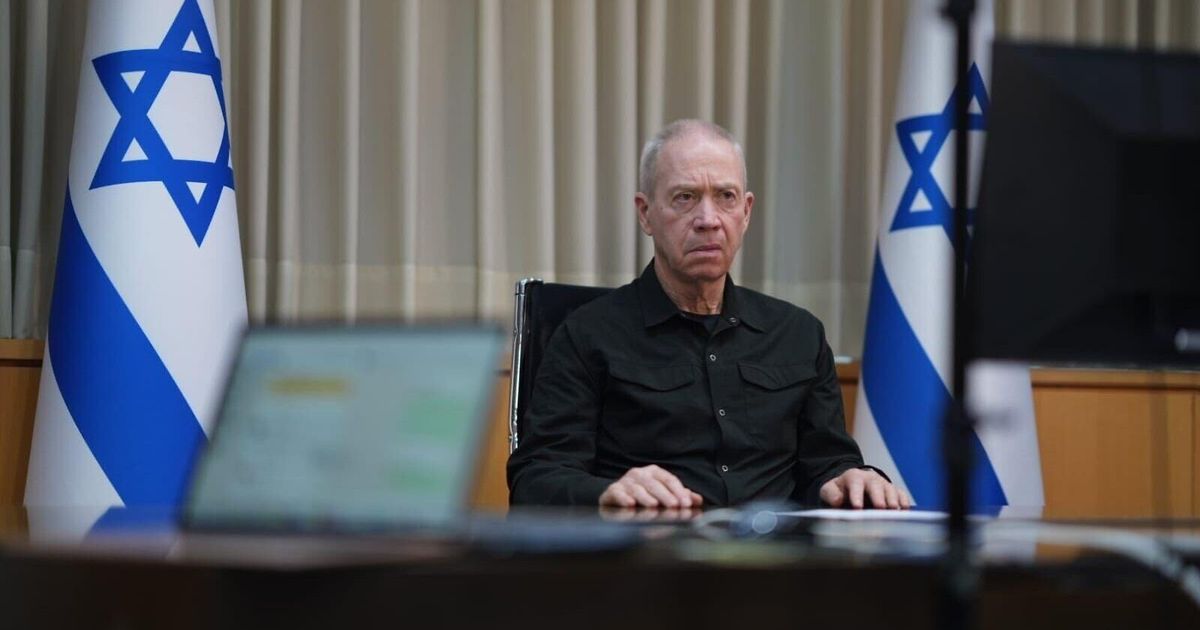
In a geopolitical arena accustomed to veiled threats and proxy skirmishes, a recent exchange between Iran's Supreme Leader Ayatollah Ali Khamenei's office and former Israeli Defense Minister Yoav Gallant stands out for its directness and stark accusations. This Iran's Vulnerabilities? Khamenei's Office Responds to Israeli Claims represents a significant, and indeed rare, departure from typical diplomatic ambiguity, with Tehran explicitly labeling Gallant's outreach as a "full-scale psychological operation." The implications of this Khamenei Under Fire: Iran Battles External Threats & Internal Protests are far-reaching, highlighting not only the escalating tensions between the two regional adversaries but also the evolving nature of modern warfare, where public perception often serves as the primary battleground.
The Battlefield of Perception: Iran's Stance Against Israeli Assertions
The core of the iran riposte khamenei lies in its dismissal of Gallant's open letter as mere propaganda designed to manipulate public opinion. Published as an op-ed on Khamenei's official website, the Iranian counter-statement argued that the true conflict isn't confined to border zones or military engagements, but rather unfolds within "public perception and the realm of awareness." This perspective underscores a critical understanding of contemporary conflict: that narratives and perceptions can be as potent as missiles in shaping outcomes.
By framing Gallant's assertions of overwhelming Israeli military and intelligence superiority as a "psychological operation," Khamenei's office strategically attempts to neutralize its impact. This move is not just for an international audience but, perhaps more crucially, for domestic consumption. In an age of pervasive information, controlling the narrative is paramount for any regime, especially one facing both external pressures and internal dissent. To label an adversary's claims as psychological warfare is to suggest that they are not rooted in fact but in manipulation, thereby urging skepticism among those exposed to the message.
Fact: Psychological operations (PsyOps) are planned operations to convey selected information and indicators to foreign audiences to influence their emotions, motives, objective reasoning, and ultimately, the behavior of foreign governments, organizations, groups, and individuals.
Unpacking Gallant's Provocation: Claims of Superiority and Warnings
Yoav Gallant's open letter, a provocative gesture in itself, was designed to rattle Tehran. In it, he laid bare a series of bold claims asserting Israel's comprehensive knowledge of Iran's inner workings. "We knew your schedules. Your sites. Your communications. Your conversations with your closest allies... Your timelines. Your fallback plans. And your blind spots," Gallant wrote, painting a picture of unparalleled Israeli intelligence penetration. This level of detail, whether entirely accurate or partially fabricated for effect, aims to sow deep seeds of paranoia and mistrust within Iran's leadership echelons.
Gallant’s letter specifically referenced a "12-day Iran-Israel war last month," detailing what he termed "the strategic collapse of a system you spent four decades constructing" during that conflict. While the precise date of this specific conflict (June 2025 in the context, likely a future or hypothetical scenario presented by Gallant or a typo in the source) requires careful interpretation, its implication of recent, significant hostilities is clear. He further warned that any attempt to restore Iran's nuclear program would inevitably invite future attacks, a stark reminder of the potential for pre-emptive strikes. His advice to Khamenei to "Abandon your war against a small, determined country a thousand miles from your border, and focus instead on the welfare and future of your own people" was a direct challenge, not just to Iran's foreign policy but to the legitimacy and priorities of its leadership.
Practical Tip: When analyzing geopolitical statements, differentiate between factual reporting and strategic messaging. Public letters from high-ranking officials often serve multiple purposes: informing allies, deterring adversaries, and influencing domestic populations.
The Broader Geopolitical Chessboard: US Involvement and Nuclear Tensions
The backdrop to this escalating war of words includes the significant involvement of the United States. Senator Cynthia Lummis, for instance, openly defended the Trump administration's "Operation Midnight Hammer," a series of June airstrikes targeting Iran's Natanz, Fordo, and Isfahan nuclear sites. Lummis asserted that Iran's nuclear program, coupled with its "Death to America" and "Death to Israel" rhetoric, represented a direct threat to both the U.S. and Israel, making the targeted strikes a "right thing to do."
Former President Donald Trump himself had previously mooted drastic measures, including the killing of Iran's Supreme Leader and regime change, before ultimately calling for a ceasefire after the U.S. attacks. While Trump declared Iran's nuclear program "obliterated," subsequent U.S. intelligence assessments have varied. An initial Defense Intelligence Agency (DIA) assessment suggested the attacks might have set Iran's program back by only months, challenging the notion of a complete dismantlement. This divergence highlights the complexity of assessing the long-term impact of military actions and the persistent challenge of verifying claims made by all parties involved. The U.S. stance adds another layer to the strategic calculus, indicating a coordinated pressure campaign against Tehran.
Beneath the Surface: Iran's Internal Challenges and Public Opinion
The external pressures and the war of narratives gain added complexity when viewed against Iran's internal landscape. Recent history reveals a country grappling with significant domestic unrest, which can be leveraged or exacerbated by external "psychological operations." The downing of a Ukrainian airliner by Iranian forces, initially denied then belatedly admitted, sparked widespread fury and mass protests, exposing deep-seated disdain for the embattled regime. Demands for Ayatollah Ali Khamenei's resignation emerged on social media and spilled onto the streets, catching authorities off-guard.
This internal turmoil, including what was described as the country's bloodiest crackdown on protests weeks prior, provides a fertile ground for foreign powers to sow discord. Gallant's suggestion for Khamenei to focus on the "welfare and future of your own people" directly taps into this vein of internal discontent. The iran riposte khamenei, therefore, is not solely an international message; it's also a powerful domestic statement aimed at projecting strength, unity, and resilience in the face of perceived foreign meddling and an attempt to rally public support against a common external enemy, diverting attention from internal grievances.
Insight: External threats, whether real or perceived, are often used by regimes to consolidate power and suppress internal dissent by invoking national unity and painting critics as collaborators or unpatriotic.
Strategic Implications and the Future of Regional Power Dynamics
The rare and direct iran riposte khamenei to Israeli officialdom marks a significant moment in the ongoing regional power struggle. It underscores a shift towards more overt information warfare, where the battle for hearts and minds is as crucial as military might. Iran's decision to directly address Gallant's letter, rather than ignoring it or responding through proxies, signals a conscious effort to challenge the Israeli narrative head-on and assert its own interpretation of events.
This exchange suggests that both sides are keenly aware of the power of perception in shaping alliances, influencing international opinion, and maintaining domestic stability. As tensions continue to simmer over nuclear ambitions, regional proxy conflicts, and internal political stability, the 'psychological operation' will likely remain a critical component of the strategic arsenals wielded by both Iran and Israel. The world watches as this complex chess game unfolds, discerning facts from calculated narratives, and understanding that every public statement carries layers of strategic intent.
Conclusion
The iran riposte khamenei against what it terms Israel's "psychological operation" is more than just a war of words; it is a critical engagement in the battle for narrative control in the Middle East. By publicly dismissing Gallant's claims as propaganda, Tehran aims to undermine Israeli assertions of superiority and rally internal support. This diplomatic tit-for-tat highlights the multifaceted nature of modern conflict, encompassing military threats, strategic intelligence, international alliances, and crucially, the manipulation of public perception. As Iran navigates its complex geopolitical landscape, marked by both external pressure and significant internal challenges, its ability to control the narrative will be as pivotal as any military defense.